I’ve been wanting to talk about Surveillance Pricing for awhile now, so let’s get into it 🙂
Join the Live Q&A Tuesday, June 30th at 7pm EST for paid subscribers
Episode 3 of The Learning Curve will come out next Friday instead of a regular article
Get Access to Bonus Content with a Paid Subscription – Starting at $5/month! 😮
Dynamic and Surge Pricing: This is when a company changes prices over time based on overall demand. The easiest way to think about this is airline fares or hotel prices. For example, a hotel may have a standard nightly rate, let’s say $100. But, on a busier weekend with more demand, for instance a parents weekend in a small college town with limited lodging, that rate may go up to $125 a night. Or, the hotel might cut the nightly rate down to $75/night if demand is low to try to encourage bookings.
Surge pricing is dynamic pricing on steroids. It can be used across different industries, but the typical example is Uber or Lyft. Both companies will raise prices on rides when there is higher demand, with the idea that higher fares will encourage more drivers to make themselves available for rides, creating more supply, and eventually prices will drop down as demand falls. Though, the level of which the pricing is increased during surge periods can be hotly debated, and Uber has made mistakes before.
Surveillance or Personalized Pricing: When companies change the price you see as an individual based on your behavior, personal data, or other characteristics, that’s surveillance pricing, also known as Behavioral Pricing or Algorithmic Pricing. Companies can use your location, income, interests, browsing behaviors, education level and more to create an individualized price.
The difference between Surveillance and Dynamic pricing is that Surveillance pricing is not based on aggregate demand trends, it can vary from person to person. So if the company thinks “Bob” may pay more, it will show Bob a higher price.
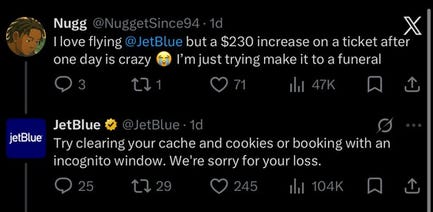
A good example of this is the JetBlue debacle from earlier this year. A customer tweeted about the price of a flight increasing by $230 from when they were looking at it the day before, and JetBlue responded telling them to clear their cache, cookies & try incognito mode for a better price:
If JetBlue was using dynamic pricing, that price increase would have been determined by the increased overall demand for that flight – meaning a ton of people bought tickets for that flight the first day the person was looking at them, and then the price increased the next day because there were less seats available.
But….based on JetBlue’s response, which they later deleted, they were using surveillance pricing. If the price was solely based on demand, these tips would not work as the flight price increase would be what it is – $230 more because more tickets were sold, so there are less tickets currently available. Instead, the advice offered was to limit the personal information JetBlue receives when you visit their website – because that would affect the price.
Important caveat – JetBlue has denied that they use personal information when determining the fare price you see on their website, and have said the social media reply was incorrect. Regardless of whether or not they were doing it, this example still showcases the mechanism of how personal data & information can affect pricing.
In general, I would say that we as a society have accepted dynamic pricing (with limits!) from mostly the travel industry. You can understand if a hotel wants to charge a little more (again, within reason) if there’s a lot of demand, or on the flip side, you can get cheaper prices by going when there’s low demand, i.e. the off season.
Price Gouging is when that dynamic pricing reaches a limit deemed “unfair” by society. Historically, price gouging typically occurs during natural disasters, pandemics, or other situations where a lot of people need something and it may be hard to get or there are only one or a few companies that can provide it. Even in the hyper-capitalistic US, we have laws against price gouging because we see it as so unfair when people are in need.
During COVID, with supply chains, work & retail environments disrupted, companies took advantage and price gouged – raising prices far beyond what was required from increased costs. Profits on average increased by 49% for the top 100 US corporations from 2020 to 2022. I talked about COVID price gouging from Proctor & Gamble and Kimberly Clarke in my Diaper Alternatives article.
Surveillance pricing veers into price gouging territory because it feels so unfair. Why do I have to pay more for a plane ticket because the company knows I live in a particular area, or have a certain income, or even simply searched for the flight the day before?
Consumer Reports has been doing amazing investigative journalism work on surveillance pricing, HUGE shout out to them. If you’re not familiar with Consumer Reports, they are a non-profit product review and testing publication and do not take advertising dollars from companies reviewed in order to maintain independent coverage. I love Consumer Reports – I modeled Cut Off the Spigot’s content sponsorship and advertising stance after them. 😍
Uber & Lyft: Released just last week, the investigation from Consumer Reports showcased how these companies used surveillance pricing to routinely charge significantly different prices for users.
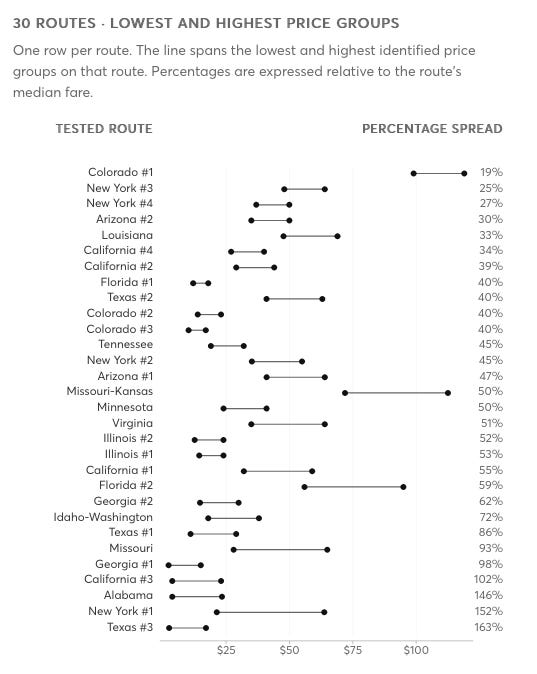
Ride prices varied by 50% on median from the highest and lowest fares for the same routes requested at the same time.
Fake Discounts – CR found that nearly 11% of all “discounts” were fictitious, meaning they were a discount off of an inflated price versus truly reducing the fare cost.
Increased Prices for Consumers, Lower Pay for Drivers, Higher Profits – Surveillance pricing increases costs for consumers, while Uber drivers’ share of the ride cost decreased from 68% in 2022 to 58% by 2024. Which likely led to Uber’s profits nearly quadrupling from 2019 ($2.1 billion) to 2025 ($7.9 billion), and Lyft went from a loss in 2019 (-$679 million) to highly profitable in 2024 ($529 million).
Instacart: CR’s investigation from last December found that Instacart’s AI-enabled pricing experiments increased grocery item costs by as much as 23%, potentially costing an average family of 4 up to $1,200 a year.
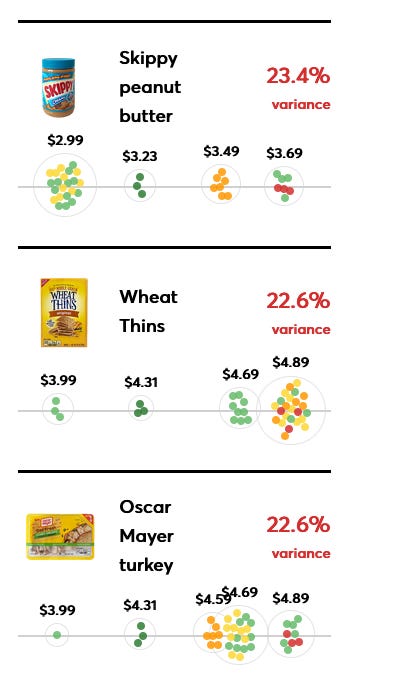
After the report was published, Instacart stopped offering the AI technology to retailers that enabled surveillance/personalized pricing.
Lawmakers have introduced legislation to tackle surveillance pricing at the federal level, while multiple states have passed laws or have legislation on the table.
Connecticut & Maryland have new laws to ban certain forms of personalized pricing
New York state has a new law passed by the legislature, the One Fair Price Act, but it won’t go into effect until Governor Hochul signs it.
House introduced the Stop AI Price Gouging and Wage Fixing Act in July 2025
Senate introduced the One Fair Price Act in December 2025
There are multiple actions you can take to fight back against surveillance pricing, both from a political angle and pressuring firms who invest in these companies to force them to disclose how pricing is determined.
How ‘bout them DEMOCRATIC SOCIALISTS?!
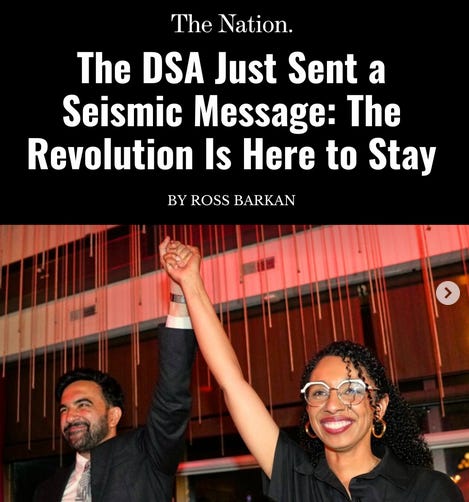
DSA candidates won the DC Mayoral primary, two congressional primaries in NY, and 7 state-level primaries across New York, including Buffalo! And while Brad Lander is not technically a DSA-endorsed candidate, he is a progressive and backed by Mayor Mamdani and his win over Dan Goldman is incredible.
These progressive candidates won despite tons of Super PAC money against them. In the NYS races alone, $2.9 million was spent to defeat DSA candidates, nearly 5 times more than the previous cycle.
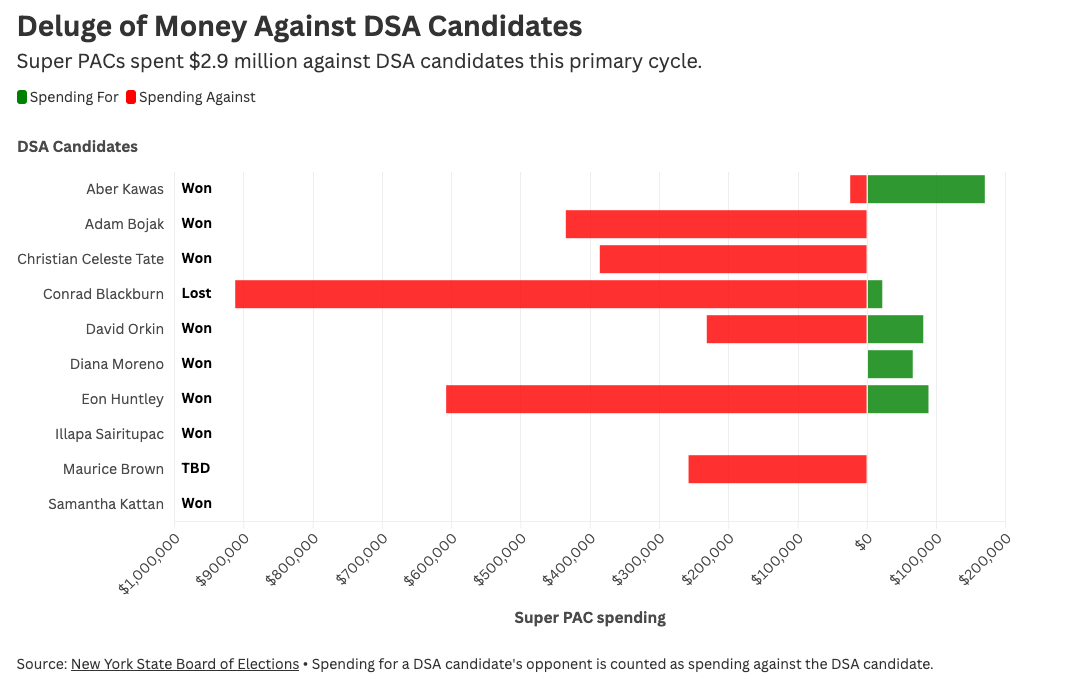
These results show that progressives can win, even if there’s a ton of money against them. And the DC mayoral race showcases that it’s not just an isolated NYC or Mamdani phenomenon – people want politicians that will do the work to actually make their lives better.
Like for example – a TWO YEAR RENT FREEZE IN NYC! This rent freeze will keep housing costs flat for approximately 1 million apartments and more than 40% of all renters.
All this to say – I am proud to be a card-carrying socialist 😁

Check out CutOffTheSpigot.com for resources, merch, and more!
Follow me on TikTok, Instagram, YouTube, BlueSky or UpScrolled for recap videos, and subscribe for the latest & greatest every Friday. Thanks for reading <3
Cut Off the Spigot is entirely community-supported. Keep the research going by getting a paid subscription today!
Get exclusive access to my new podcast, The Learning Curve, merch discounts, Live Q&A’s and more!